
Introduction
Every business wants more people to visit its website, generate quality leads, and increase sales. One of the most effective ways to achieve these goals is through Search Engine Optimization in Digital Marketing. SEO helps your website appear higher in search engine results when users search for products, services, or information related to your business.
Unlike paid advertising, SEO provides long-term organic traffic without paying for every click. Whether you own a small business, manage an eCommerce store, or work as a freelancer, understanding SEO can help you grow your online presence. This guide explains everything you need to know about SEO in simple English, making it easy for beginners and professionals alike.
What Is Search Engine Optimization in Digital Marketing?
Search Engine Optimization in Digital Marketing is the process of improving a website so that it ranks higher on search engines like Google and Bing. The main goal is to increase organic traffic by making your website more useful, relevant, and trustworthy.
SEO involves optimizing website content, improving technical performance, building quality backlinks, and providing an excellent user experience. Search engines evaluate hundreds of ranking factors before deciding where your website should appear in search results.
When SEO is done correctly, your website becomes more visible to potential customers searching for your products or services.
Why Is Search Engine Optimization in Digital Marketing Important?
SEO has become one of the most valuable digital marketing strategies because people use search engines every day to find information and solutions.
Some important reasons include:
- Increases organic website traffic
- Builds brand credibility and trust
- Improves online visibility
- Generates high-quality leads
- Delivers long-term marketing results
- Provides a better user experience
- Reduces customer acquisition costs
- Helps businesses compete effectively online
A well-optimized website can continue attracting visitors for months or even years after publishing quality content.
Key Benefits of SEO
1. Higher Search Engine Rankings
Better optimization helps your website appear on the first page of search results where most users click.
2. More Organic Traffic
Higher rankings naturally bring more visitors without paying for advertisements.
3. Better User Experience
SEO improves page speed, mobile responsiveness, navigation, and content quality.
4. Increased Brand Authority
Users trust websites that consistently appear at the top of Google search results.
5. Higher Conversion Rates
SEO attracts people already searching for your products or services, making them more likely to become customers.
6. Cost-Effective Marketing
Unlike paid advertising, SEO continues delivering results long after optimization work is completed.
How Search Engine Optimization in Digital Marketing Works
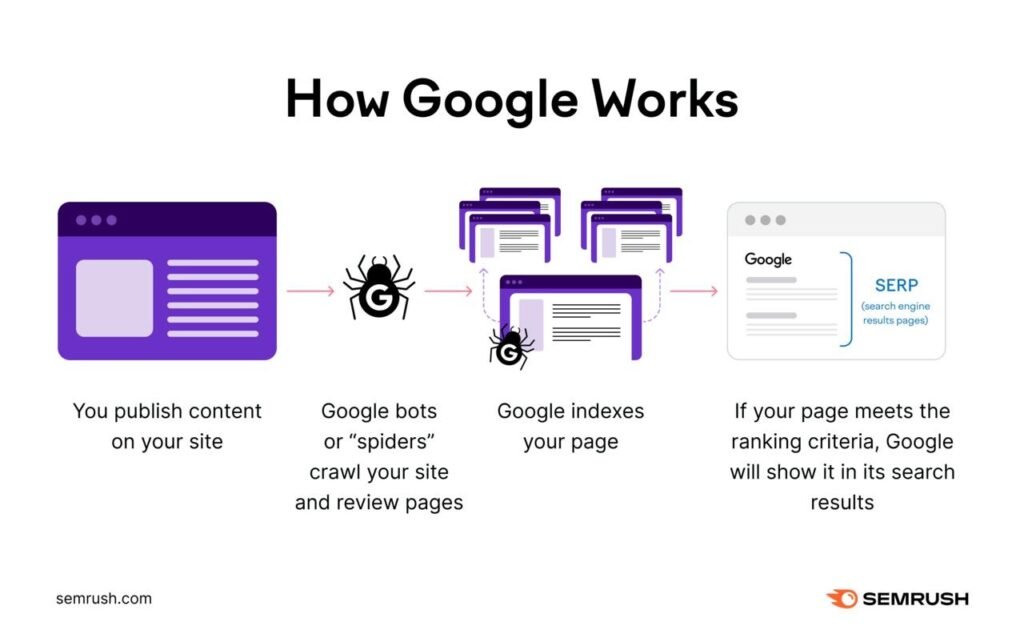
Search Engine Optimization in Digital Marketing works by helping search engines understand your website better.
The process generally includes:
Crawling
Search engines use bots to discover new pages across the internet.
Indexing
After crawling, pages are stored in Google’s database.
Ranking
Google evaluates hundreds of ranking signals such as content quality, page speed, backlinks, mobile friendliness, and user experience before displaying search results.
If your website provides valuable information and follows SEO best practices, it has a better chance of ranking higher.
On-Page SEO
On-page SEO focuses on optimizing everything directly on your website.
Important On-Page SEO Factors
- Keyword optimization
- SEO-friendly titles
- Meta descriptions
- Proper heading structure (H1, H2, H3)
- Internal linking
- Image optimization
- Alt text for images
- URL optimization
- High-quality content
- Mobile-friendly design
Good on-page SEO helps search engines understand the purpose of every page.
Off-Page SEO
Off-page SEO refers to activities outside your website that improve its authority.
Effective Off-Page SEO Techniques
- High-quality backlinks
- Guest blogging
- Social media sharing
- Brand mentions
- Influencer collaborations
- Online directory listings
- Local citations
Quality backlinks from trusted websites remain one of Google’s strongest ranking factors.
Technical SEO
Technical SEO ensures search engines can easily crawl, understand, and index your website.
Essential Technical SEO Practices
- Improve page loading speed
- Use HTTPS security
- Create XML sitemaps
- Optimize robots.txt
- Fix broken links
- Remove duplicate content
- Use structured data
- Optimize Core Web Vitals
- Make the website mobile responsive
Technical SEO creates a strong foundation for all other optimization efforts.
Best Practices for Better SEO Results
Following proven SEO practices improves your chances of ranking well.
Focus on User Intent
Create content that answers real questions people are searching for.
Publish High-Quality Content
Write informative, unique, and engaging articles that solve problems.
Optimize for Mobile Devices
Most users browse websites using smartphones.
Improve Website Speed
Fast-loading websites provide better user experiences and improve rankings.
Use Internal Links
Connect related articles to help visitors and search engines navigate your website.
Update Content Regularly
Refresh old articles with new information to keep them relevant.
Optimize Images
Compress images and use descriptive alt text.
Monitor Performance
Track rankings, traffic, and user behavior using SEO tools.
Common SEO Mistakes to Avoid
Many websites fail to rank because of simple SEO mistakes.
Avoid these common errors:
- Keyword stuffing
- Duplicate content
- Slow website speed
- Ignoring mobile optimization
- Poor internal linking
- Missing meta descriptions
- Broken links
- Low-quality backlinks
- Thin content
- Not updating old content
Fixing these issues can significantly improve search engine performance.
Tips for Long-Term SEO Success
SEO is not a one-time task. Consistent improvement brings the best results.
Keep these habits:
- Research keywords regularly
- Publish valuable content consistently
- Build natural backlinks
- Improve user experience
- Analyze competitors
- Monitor SEO performance
- Stay updated with Google algorithm changes
Patience and consistency are essential because SEO results usually take time.
Frequently Asked Questions
What is Search Engine Optimization in Digital Marketing?
It is the process of improving a website to rank higher in search engines and attract more organic visitors.
How long does SEO take to show results?
Most websites begin seeing noticeable improvements within three to six months, depending on competition and optimization quality.
Is SEO better than paid advertising?
SEO provides long-term organic traffic, while paid advertising delivers immediate visibility. Both strategies work best when combined.
Why is keyword research important?
Keyword research helps you understand what users are searching for, allowing you to create relevant content that matches their intent.
Can beginners learn SEO?
Yes. With consistent practice, quality content, and proper optimization techniques, beginners can successfully learn SEO.
Conclusion
Search Engine Optimization in Digital Marketing is one of the most powerful strategies for growing your online presence. It helps businesses improve visibility, attract qualified visitors, increase credibility, and generate long-term results without relying entirely on paid advertising.
By focusing on quality content, strong technical performance, effective on-page optimization, and ethical off-page strategies, you can build a website that performs well in search engines and provides value to your audience. SEO requires patience and consistency, but the long-term benefits make it one of the smartest investments for any business.
Ready to grow your website? Start implementing these SEO best practices today and build a strong online presence that attracts more visitors, generates quality leads, and supports long-term business success.Introduction
Every business wants more people to visit its website, generate quality leads, and increase sales. One of the most effective ways to achieve these goals is through Search Engine Optimization in Digital Marketing. SEO helps your website appear higher in search engine results when users search for products, services, or information related to your business.
Unlike paid advertising, SEO provides long-term organic traffic without paying for every click. Whether you own a small business, manage an eCommerce store, or work as a freelancer, understanding SEO can help you grow your online presence. This guide explains everything you need to know about SEO in simple English, making it easy for beginners and professionals alike.
What Is Search Engine Optimization in Digital Marketing?
Search Engine Optimization in Digital Marketing is the process of improving a website so that it ranks higher on search engines like Google and Bing. The main goal is to increase organic traffic by making your website more useful, relevant, and trustworthy.
SEO involves optimizing website content, improving technical performance, building quality backlinks, and providing an excellent user experience. Search engines evaluate hundreds of ranking factors before deciding where your website should appear in search results.
When SEO is done correctly, your website becomes more visible to potential customers searching for your products or services.
Why Is Search Engine Optimization in Digital Marketing Important?
SEO has become one of the most valuable digital marketing strategies because people use search engines every day to find information and solutions.
Some important reasons include:
- Increases organic website traffic
- Builds brand credibility and trust
- Improves online visibility
- Generates high-quality leads
- Delivers long-term marketing results
- Provides a better user experience
- Reduces customer acquisition costs
- Helps businesses compete effectively online
A well-optimized website can continue attracting visitors for months or even years after publishing quality content.
Key Benefits of SEO
1. Higher Search Engine Rankings
Better optimization helps your website appear on the first page of search results where most users click.
2. More Organic Traffic
Higher rankings naturally bring more visitors without paying for advertisements.
3. Better User Experience
SEO improves page speed, mobile responsiveness, navigation, and content quality.
4. Increased Brand Authority
Users trust websites that consistently appear at the top of Google search results.
5. Higher Conversion Rates
SEO attracts people already searching for your products or services, making them more likely to become customers.
6. Cost-Effective Marketing
Unlike paid advertising, SEO continues delivering results long after optimization work is completed.
How Search Engine Optimization in Digital Marketing Works
Search Engine Optimization in Digital Marketing works by helping search engines understand your website better.
The process generally includes:
Crawling
Search engines use bots to discover new pages across the internet.
Indexing
After crawling, pages are stored in Google’s database.
Ranking
Google evaluates hundreds of ranking signals such as content quality, page speed, backlinks, mobile friendliness, and user experience before displaying search results.
If your website provides valuable information and follows SEO best practices, it has a better chance of ranking higher.
On-Page SEO
On-page SEO focuses on optimizing everything directly on your website.
Important On-Page SEO Factors
- Keyword optimization
- SEO-friendly titles
- Meta descriptions
- Proper heading structure (H1, H2, H3)
- Internal linking
- Image optimization
- Alt text for images
- URL optimization
- High-quality content
- Mobile-friendly design
Good on-page SEO helps search engines understand the purpose of every page.
Off-Page SEO
Off-page SEO refers to activities outside your website that improve its authority.
Effective Off-Page SEO Techniques
- High-quality backlinks
- Guest blogging
- Social media sharing
- Brand mentions
- Influencer collaborations
- Online directory listings
- Local citations
Quality backlinks from trusted websites remain one of Google’s strongest ranking factors.
Technical SEO
Technical SEO ensures search engines can easily crawl, understand, and index your website.
Essential Technical SEO Practices
- Improve page loading speed
- Use HTTPS security
- Create XML sitemaps
- Optimize robots.txt
- Fix broken links
- Remove duplicate content
- Use structured data
- Optimize Core Web Vitals
- Make the website mobile responsive
Technical SEO creates a strong foundation for all other optimization efforts.
Best Practices for Better SEO Results
Following proven SEO practices improves your chances of ranking well.
Focus on User Intent
Create content that answers real questions people are searching for.
Publish High-Quality Content
Write informative, unique, and engaging articles that solve problems.
Optimize for Mobile Devices
Most users browse websites using smartphones.
Improve Website Speed
Fast-loading websites provide better user experiences and improve rankings.
Use Internal Links
Connect related articles to help visitors and search engines navigate your website.
Update Content Regularly
Refresh old articles with new information to keep them relevant.
Optimize Images
Compress images and use descriptive alt text.
Monitor Performance
Track rankings, traffic, and user behavior using SEO tools.
Common SEO Mistakes to Avoid
Many websites fail to rank because of simple SEO mistakes.
Avoid these common errors:
- Keyword stuffing
- Duplicate content
- Slow website speed
- Ignoring mobile optimization
- Poor internal linking
- Missing meta descriptions
- Broken links
- Low-quality backlinks
- Thin content
- Not updating old content
Fixing these issues can significantly improve search engine performance.
Tips for Long-Term SEO Success
SEO is not a one-time task. Consistent improvement brings the best results.
Keep these habits:
- Research keywords regularly
- Publish valuable content consistently
- Build natural backlinks
- Improve user experience
- Analyze competitors
- Monitor SEO performance
- Stay updated with Google algorithm changes
Patience and consistency are essential because SEO results usually take time.
Frequently Asked Questions
What is Search Engine Optimization in Digital Marketing?
It is the process of improving a website to rank higher in search engines and attract more organic visitors.
How long does SEO take to show results?
Most websites begin seeing noticeable improvements within three to six months, depending on competition and optimization quality.
Is SEO better than paid advertising?
SEO provides long-term organic traffic, while paid advertising delivers immediate visibility. Both strategies work best when combined.
Why is keyword research important?
Keyword research helps you understand what users are searching for, allowing you to create relevant content that matches their intent.
Can beginners learn SEO?
Yes. With consistent practice, quality content, and proper optimization techniques, beginners can successfully learn SEO.
Conclusion
Search Engine Optimization in Digital Marketing is one of the most powerful strategies for growing your online presence. It helps businesses improve visibility, attract qualified visitors, increase credibility, and generate long-term results without relying entirely on paid advertising.
By focusing on quality content, strong technical performance, effective on-page optimization, and ethical off-page strategies, you can build a website that performs well in search engines and provides value to your audience. SEO requires patience and consistency, but the long-term benefits make it one of the smartest investments for any business.
Ready to grow your website? Start implementing these SEO best practices today and build a strong online presence that attracts more visitors, generates quality leads, and supports long-term business success.